Nebraska Women in STEM talked to UNL’s Dr. Marianna Burks about non-linear career paths and making STEM feel like home.
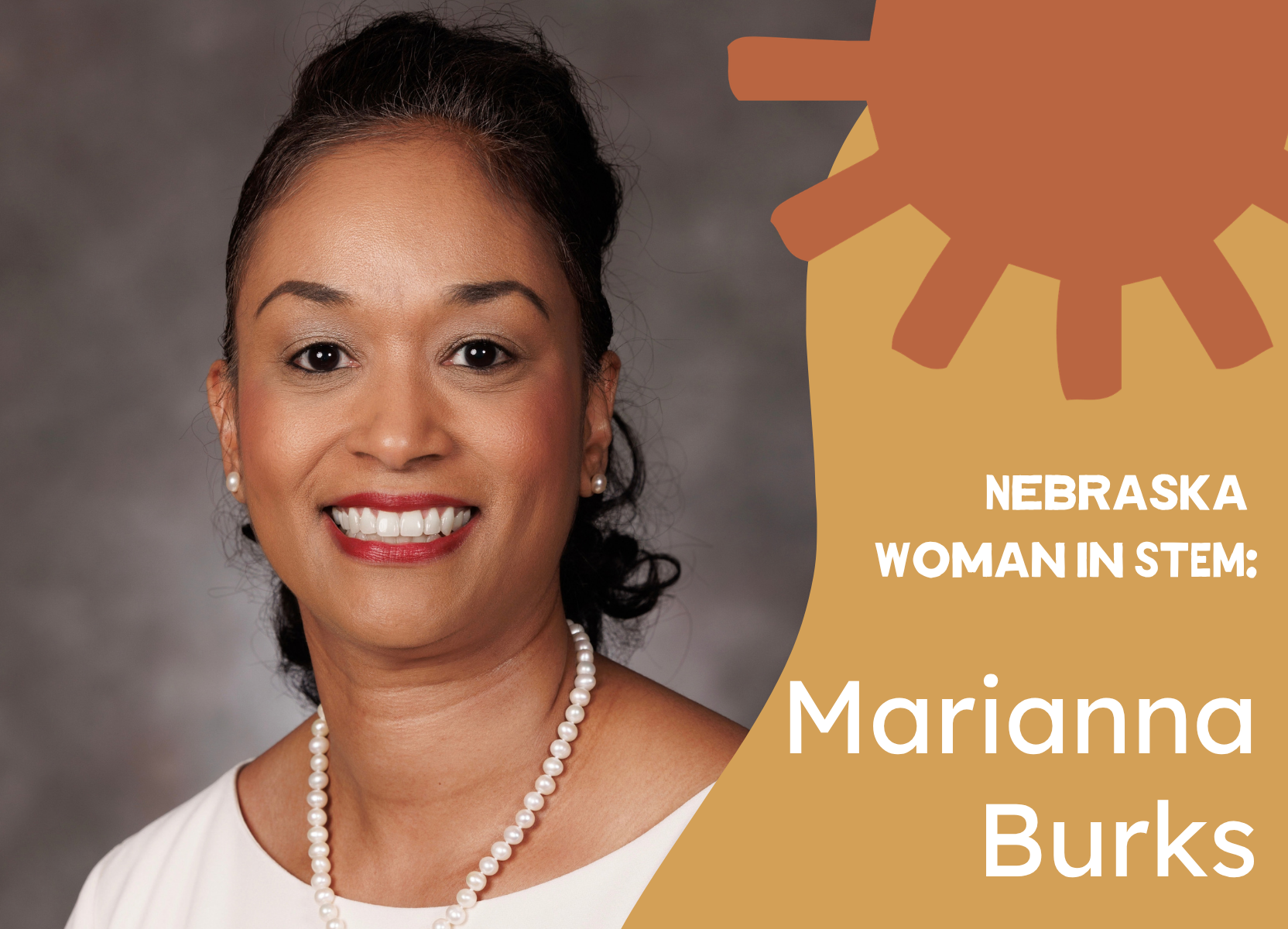
Music blasts down the halls of the University of Nebraska-Lincoln’s biology department. Following the sound of music and laughter leads to Dr. Marianna Burks’ office, assistant professor of practice, where a dozen students have gathered to unwind and make slime after a morning of STEM research development. They sing along and mix the slime with their hands.
These students are part of the STEM-POWER program, which brings incoming first-year students from underrepresented populations to campus for summer research and to build community, which is part of Marianna’s mission to make STEM welcoming and accessible to all.
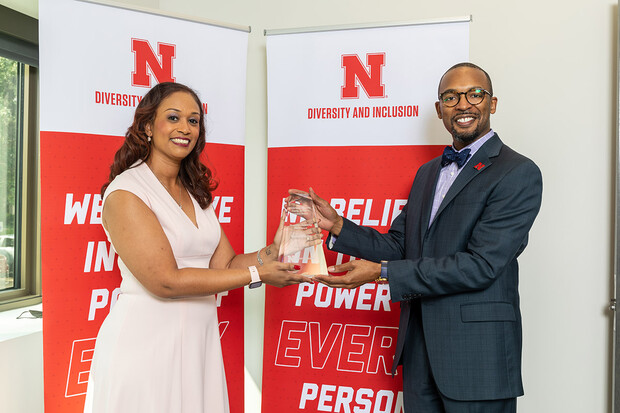
From the surface, with an office full of enthusiastic students, a STEM development program in its sixth successful cohort, and a national award for inclusive mentorship, it’s easy to assume she had this path mapped out from the beginning. But it was full of many twists and turns.
“I didn’t have a linear journey,” Marianna said.
Marianna came to Nebraska in 1997 to complete an undergraduate degree in animal science and then went on to a masters, drawn to animal behavior and with a love of horses. She took internships in Wyoming working with wild horses, picturing herself ending up with a career in the federal government.
Then, she hit a set of roadblocks. Her research was not panning out, the protocols wouldn’t validate.
“I got the undergrad and then got the master’s, but then I burnt out,” Marianna said
She stepped away from research, with a short stint working at a vet’s clinic, but soon found her way back, taking a position as a lab manager with the avian cognition lab where she would stay for the next 11 years. Marianna found that she was great at teaching in her role showing others how to run experiments. Then, a colleague asked her a question that would add yet another twist in her story: would she consider teaching?
“That shift, when you’ve been doing research for so long and move into teaching, is something you don’t know you’re going to be good at until you do it,” Marianna said.
She learned she was good at it. So good that another colleague told her she needed a doctorate: not for the training, but because “you’re doing the work already, you just need the credentials.”
“What I thought I wanted at the time and what ended up happening, I feel like my purpose is being served more [by teaching], rather than having a federal job,” Marianna said.
None of it unfolded in an order she would have expected, but that’s a point she wants her students to understand.
“So many students come into the university thinking, ‘oh, I have to go into this category of a job: nursing or dentistry or pre-med or nutrition,” Marianna said. “But, what they come to realize is that you don’t have to be limited in just a profession.”
She hopes that providing community, mentorship, and invitations for students to step into research will allow them to broaden their ideas of what their future in STEM could look like.
“If I come across a student, especially a minority student, I’ll ask them, ‘Hey, are you interested in research?’” Marianna said. “They’ll say, ‘I never thought about it.’ They’ll come back eventually and say, ‘Hey, Dr. Burks, what about that research you were mentioning?’… I’m very intentional about finding opportunities or creating opportunities so that it strengthens that student’s future goal.”
Marianna’s drive to match students from underrepresented groups with research opportunities started out informally, personally reaching out to scientists who may take on student mentees. She knows firsthand how having supportive mentors can completely transform a student’s outlook, because a mentor changed hers.
“[During my undergrad] I had some faculty that were very dismissive… being a minority and not having that kind of support from a department made us feel that we weren’t accepted,” Marianna said. “It was actually an advisor, Dr. Beck… she really took us under her wing and advocated for us. She fought for us.”
Now, STEM POWER is an official program, going strong, supported by the biology department, and co-directed by Marianna.
“That’s what I love so much about our department. We are so community-based,” Marianna said. “We really are intentional about putting support in place for a student so they can be successful.”