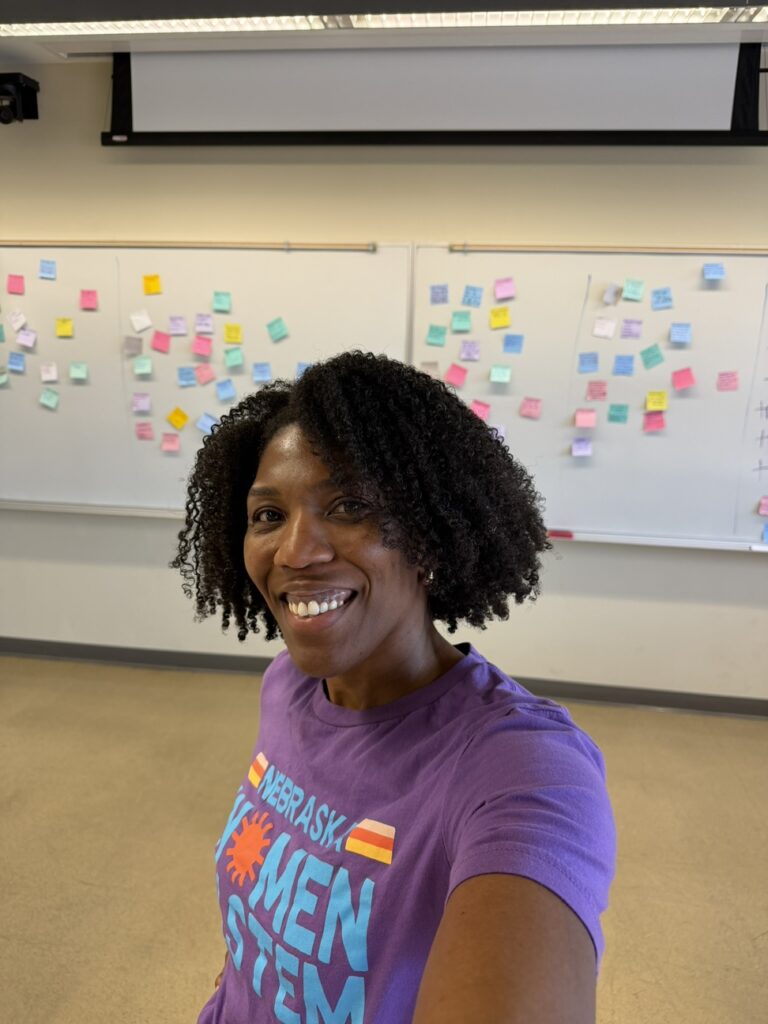
Nebraska Women in STEM talked to Keyosha Atwater about rethinking STEM education through curiosity, creativity, and AI.
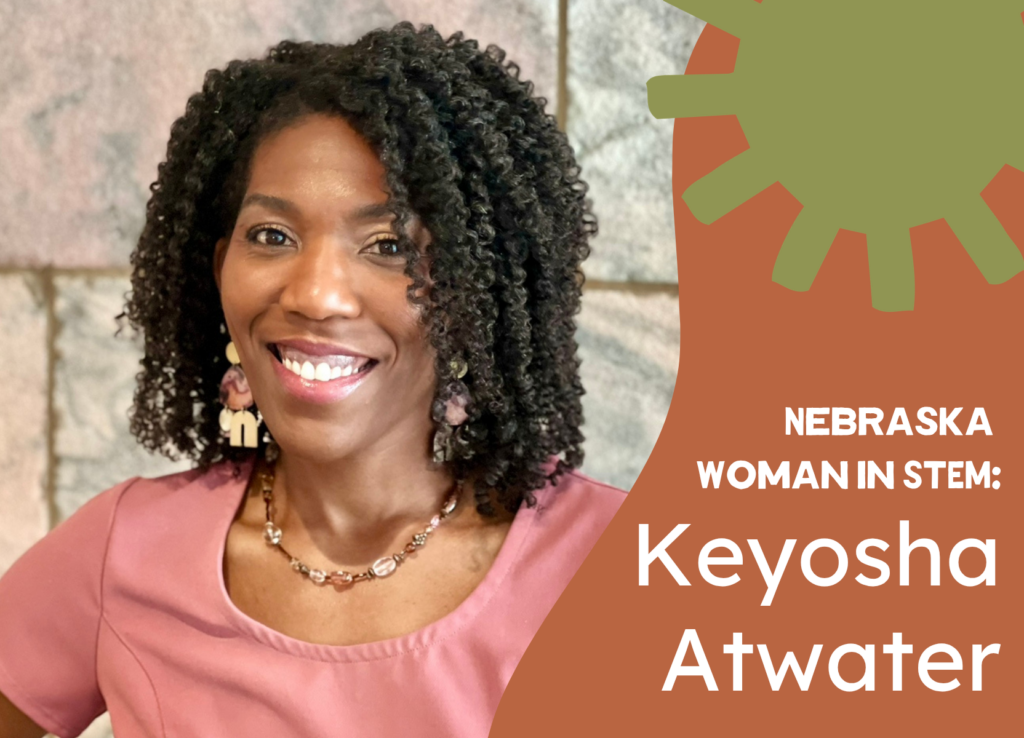
ReflectED founder Keyosha Atwater believes the key to strong STEM education lies in the intersection of arts, science, and fostering curiosity. Her nonprofit supports kids in developing learning skills and AI literacy, and she says the future of learning is being able to use multiple approaches and disciplines to explore the same problem.
“One of the ways to be innovative, shape the future, and forge an independent world is being able to marry the arts with more analytical work,” Keyosha said. “If you think of STEAM, that’s where all of that creativity comes in, and you are able to see how innovation changes things.”
That philosophy of integrated learning is reflected in her multifaceted career. Along with being the founder of ReflectED, she calls herself an educator, researcher, and a lover of literacy.
“Over a decade ago, I started teaching my oldest how to read,” Keyosha said. “Teaching her how to read and observing the learning, I started to see… how much work went into developing a learner.”
Observing her daughter sparked Keyosha’s interest in the intersection of education and technology, a field she believes offers powerful opportunities to improve learning. This interest ultimately shaped her doctoral research in metacognition, or thinking about how we think.
“Oftentimes, we would keep [education and technology] separate, but as I continue to combine them, what I recognize is that not only were they learning deeply, but they were able to be more creative learners.”
For example, while running a coding summer camp for teenagers, Keyosha integrates multiple disciplines alongside STEM.
“We were discussing game design, and I was asking their favorite games,” Keyosha said. “I was like, ‘ok, what goes into making a game?’ They were starting to think about it, and I was like, ‘Who are your characters? What’s the storyline?” And they were like, ‘That all goes in there?’”
Understanding that learning goes beyond the problem set is also key to developing a strong STEM education.
“When they understand that this is what learning is and this is how it applies to a job, they start thinking bigger. School makes it feel separate, but it really shouldn’t be.”
Embracing the arts isn’t just something Keyosha teaches — it’s how she works through problems herself.
“Being able to lean into your creative side is a way for kids and adults to step back from problems and be more imaginative. I like to make cards, I love to draw and color; it gives my mind a way to pause and lose itself, if you will. That’s when that solution to the problem hits.”
That same curiosity and creativity, Keyosha argues, is exactly why learners need to work with AI effectively. Keyosha does not see AI as a threat to learning but rather as a tool that requires human emotion and creativity.
“One of the best ways to work with [AI] is to lead with knowledge,” Keyosha said. “Your knowledge is going to help you think critically, think deeply, about the problems you see. AI cannot do that unless we prompt it to do so. It can’t think like us.”
At her summer camps, Keyosha leans into using AI by encouraging campers to build apps with the assistance of AI. While generative AI may be new, the skills she’s building in campers — problem-solving, critical thinking, and creativity — are timeless.
“AI and how it is evolving is making us really have to delve deep into those soft skills,” Keyosha said. “It’s really easy to teach someone how to code, or how to use a tool, but you also have to have the soft skills and understand how to ask those questions and how to build relationships.”
Ultimately, Keyosha is working toward well-rounded, curious learners. For Keyosha, joy can be found when curiosity takes hold.
“Knowing that I get to plant a seed and start to help them germinate it, because if they are asking questions, they are curious.”