
Nebraska Women in STEM talked to Ashley Hernandez-Najera about building her own path in engineering.
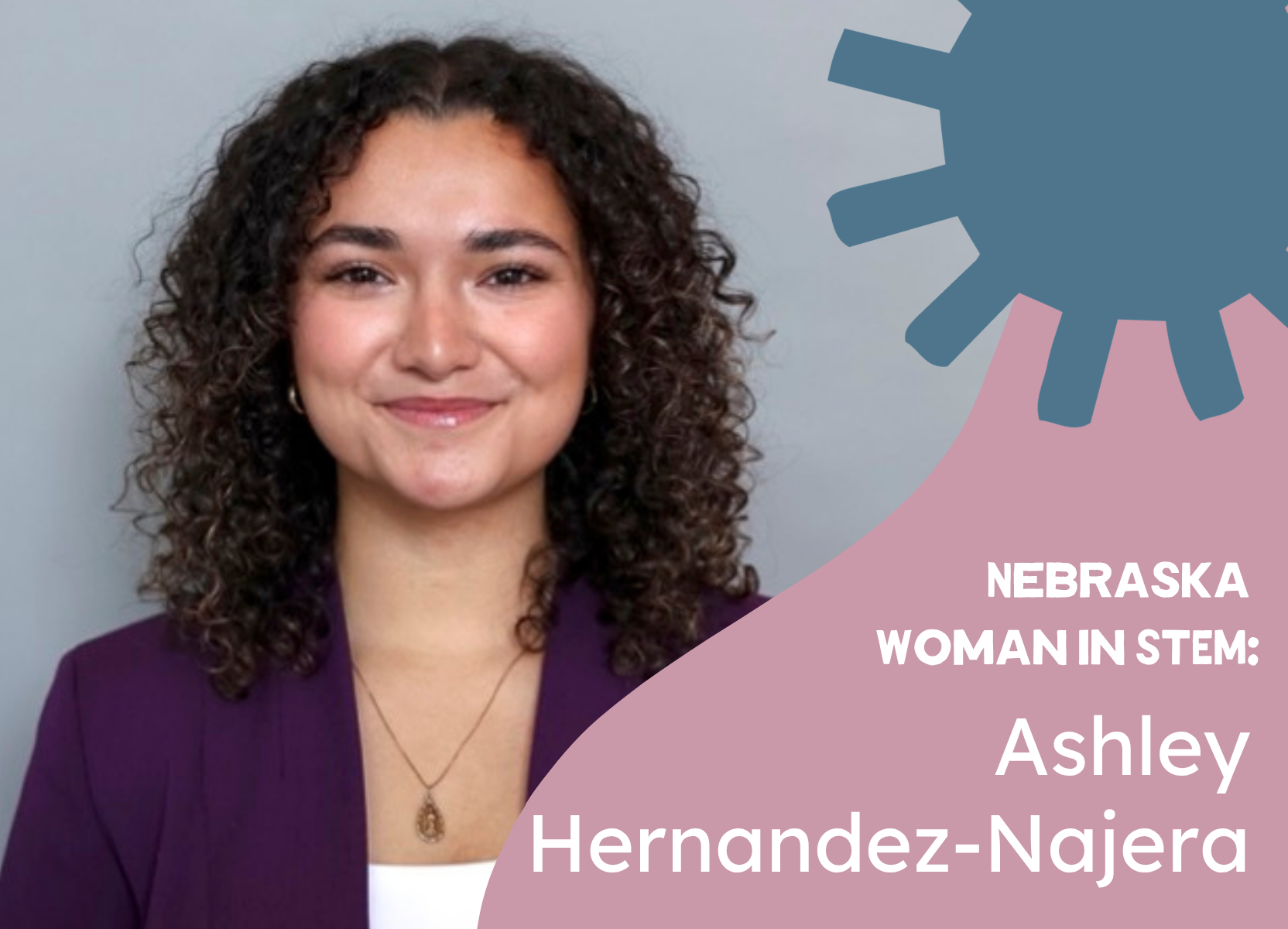
When Ashley Hernandez-Najera was growing up in Omaha, she sometimes accompanied her father to work. He owned a construction company, and Ashley watched as open fields gradually became houses and buildings.
“It’s always fascinated me how something can start from the ground and be nothing, and then slowly work its way up,” she said.
That early exposure helped Ashley see the connection between engineering and the people who ultimately use the spaces engineers create.
“People are able to create in that space, they’re able to gather in that space,” she said. “That’s what made me fall in love with civil engineering. Our work is used for the betterment of future generations!”
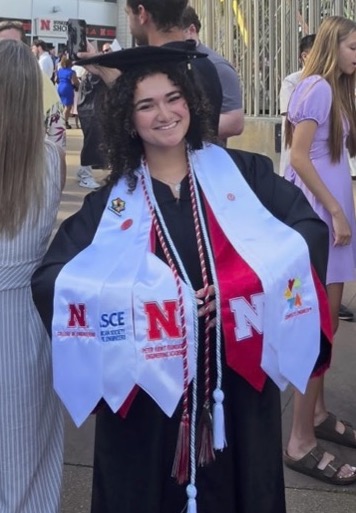
Today, that interest has become her career. After graduating from Omaha Central High School and the University of Nebraska–Lincoln, Ashley is now working as a structural engineer with the U.S. Army Corps of Engineers in Omaha.
Ashley first heard the term “civil engineering” during her freshman year of high school. As she learned more about the field, it began to connect the things she already enjoyed: STEM, science and construction.
As a first-generation college student, Ashley had to think carefully about how she would pay for college.
“I had to keep in my mind how I’m going to help my family in the future, but I can’t help them by putting them into thousands of dollars of debt,” she said.
Ashley applied for scholarships and eventually learned about the Peter Kiewit Engineering Academy at UNL. She became part of the Academy’s first cohort, receiving financial support as well as something she would come to value just as much: community.
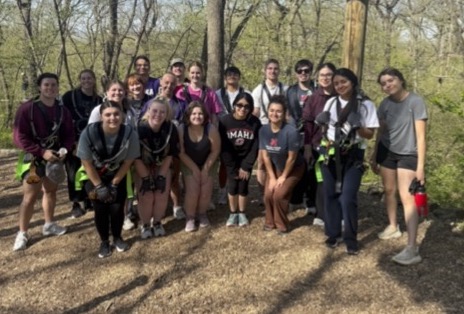
The Academy brought students together before classes began and connected them with engineers and professionals through networking and job-shadowing opportunities.
For Ashley, those connections helped fill a gap she hadn’t realized she was missing.
“I didn’t have a lot of connections with people that went to college,” she said.
The Academy gave her access to people who could help her understand the profession and imagine herself in it. One job-shadowing experience even helped Ashley determine that transportation engineering wasn’t for her. She said finding your path includes figuring out what you don’t want to do.
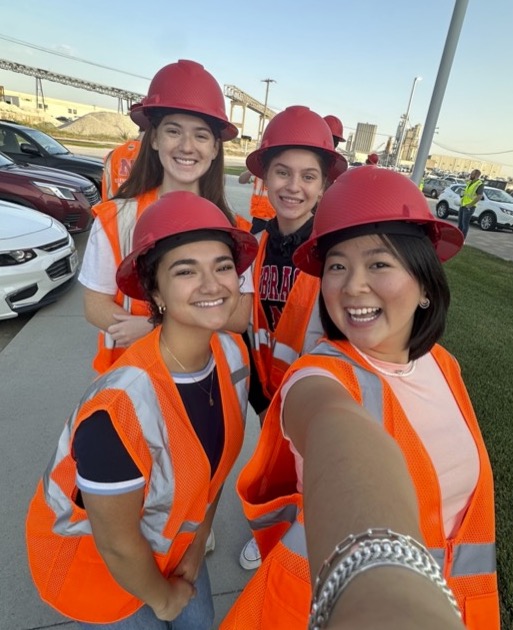
Now Ashley is putting her education and experience into practice with the Corps of Engineers. Her work includes modeling and design, checking calculations, and learning how projects come together in the real world.
She’s also getting out from behind the desk. Working on construction sites has reinforced something she learned from her father: good engineering isn’t just about creating a design that works on paper. It needs to make sense for the people who will build it and maintain it. Being on site has given Ashley a better understanding of those challenges.
“There’s so much that goes into it,” she said. “Sitting behind your desk and being in your cubicle all day, you’re not going to be able to see that, or even be able to imagine it properly.”
For now, she’s focused on continuing to learn and grow as an engineer.
Ashley describes herself as an introvert growing up, but she learned an important lesson in high school: If people don’t know what you’re interested in, they can’t help you find opportunities.
“I realized at some point in high school, if I don’t talk about what I want, people aren’t going to know what I want, and I’m not going to get those opportunities,” she said.
Today, she’s much more comfortable talking about her interests and connecting with people. Her advice to others entering STEM is straightforward.
“Acknowledging what you’re interested in, what you like doing, and then talk to people about that,” she said. “The amount of opportunities that come your way when people know that you’re interested, it’s exponentially increased.”
It’s a lesson Ashley is already putting into practice—and one she hopes to pass along to others.
She’s still early in her engineering career, but she’s thinking about how she can help create opportunities for the next generation, too. Her experience with the Peter Kiewit Engineering Academy showed her how powerful it can be when someone opens a door, makes a connection or simply helps you see what’s possible.
Now Ashley is beginning to do the same for others. “We really are intentional about putting support in place for a student so they can be successful.”