Nebraska Women in STEM talked to Ann Williams about finding community through engineering and using it to help build stronger communities across Nebraska.
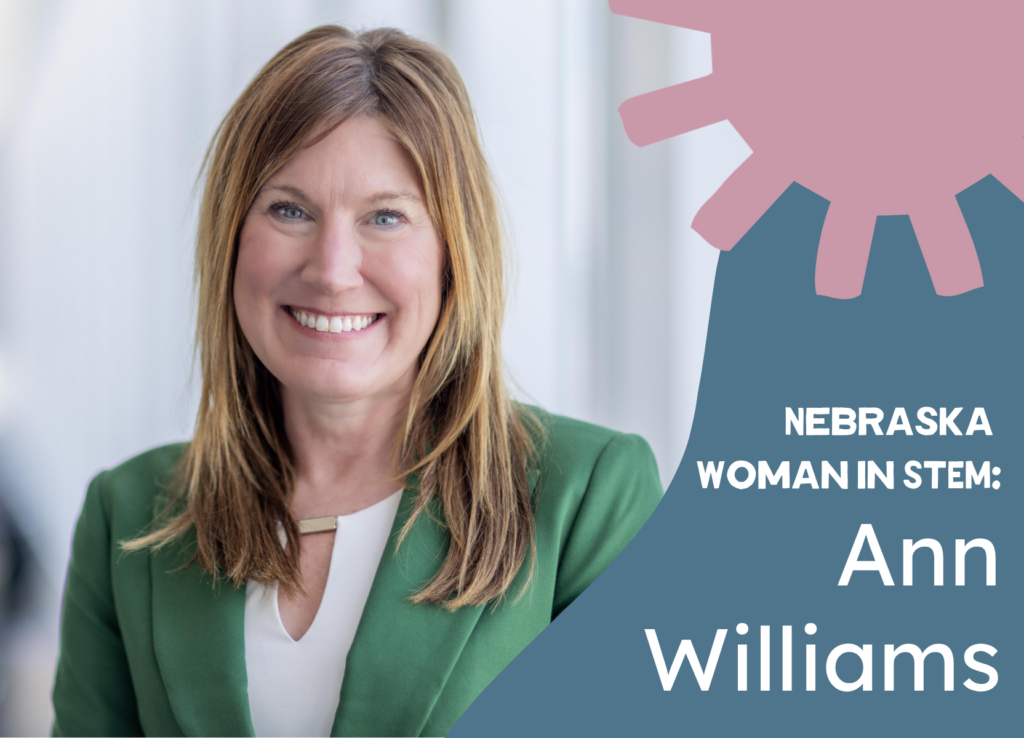
From flood control reservoirs and wastewater treatment facilities to Omaha’s new riverfront, Ann Williams has spent her career building things that create community. She also credits engineering itself for doing the same for her.
Now Senior Vice President at HDR overseeing around 650 engineers, and scientists, Ann was introduced to engineering by her dad, an industrial arts teacher, who taught her drafting in high school. Although the 90s “weren’t a big time for women in engineering,” she entered the University of Nebraska-Lincoln’s civil engineering program with a desire to make the world a better place.
And there, she found community.
“I was somewhat shy at the time, but when I was in this space with other engineers, I felt like I could be myself and contribute in a different way.” Ann said. “It’s a big school, and you think ‘gosh, there’s so many people here,’ but each of those departments — and the civil engineering department specifically for me — felt like a manageable number of people. It felt like a family.”
The sense of camaraderie was strengthened by projects such as designing and testing concrete canoes. Ann described a particular connection among the women in her class.
“We all lifted each other up, especially the women in that class; we studied together, we helped each other, we pulled each other up.”
Entering the workforce, Ann brought that collaborative spirit. She also learned to embrace her strengths and what made her perspective unique.
“I don’t want to come into a room and be a female engineer. I just want to be an engineer, or a leader, or whatever that looks like,” Ann said. “But I do know that as women we offer different experiences, we have different mindsets, we offer that diversity of thought. In this age of AI, maybe the more important things aren’t your design skills, but your ability to connect with clients, your ability to solve problems.”
Building community carried her through many roles at HDR: studying air and ground water quality, determining flood and drought impacts, and project management and business development.
“I really found my passion was talking to clients and helping them solve their problems,” Ann said. “I didn’t know everything about every project or all the technical pieces about designing a dam or a reservoir, for instance, but I had this connection to clients where I could come and listen and find out what problem they needed solved and how we could help.”
Ann’s firm also emphasizes community within its hallways and in its project meetings. “We’re kind of relentless about collaboration, and that shows up through the impact we’ve had on the region – designing local sporting venues, medical and educational facilities, roadways, waterways and runways.” That focus has helped HDR become the largest employee-owned firm in the architecture, engineering and construction services industry.
For Ann, a focus on connecting and building communities is also tied to a broader challenge facing the state.
“One of our big problems in Nebraska is getting people to stay,” Ann said. “We have great amenities in this state, we have great natural resources, it’s a great lifestyle… but how do you get young people to want to work in Nebraska? I think being able to do cool things in the community brings people back.”
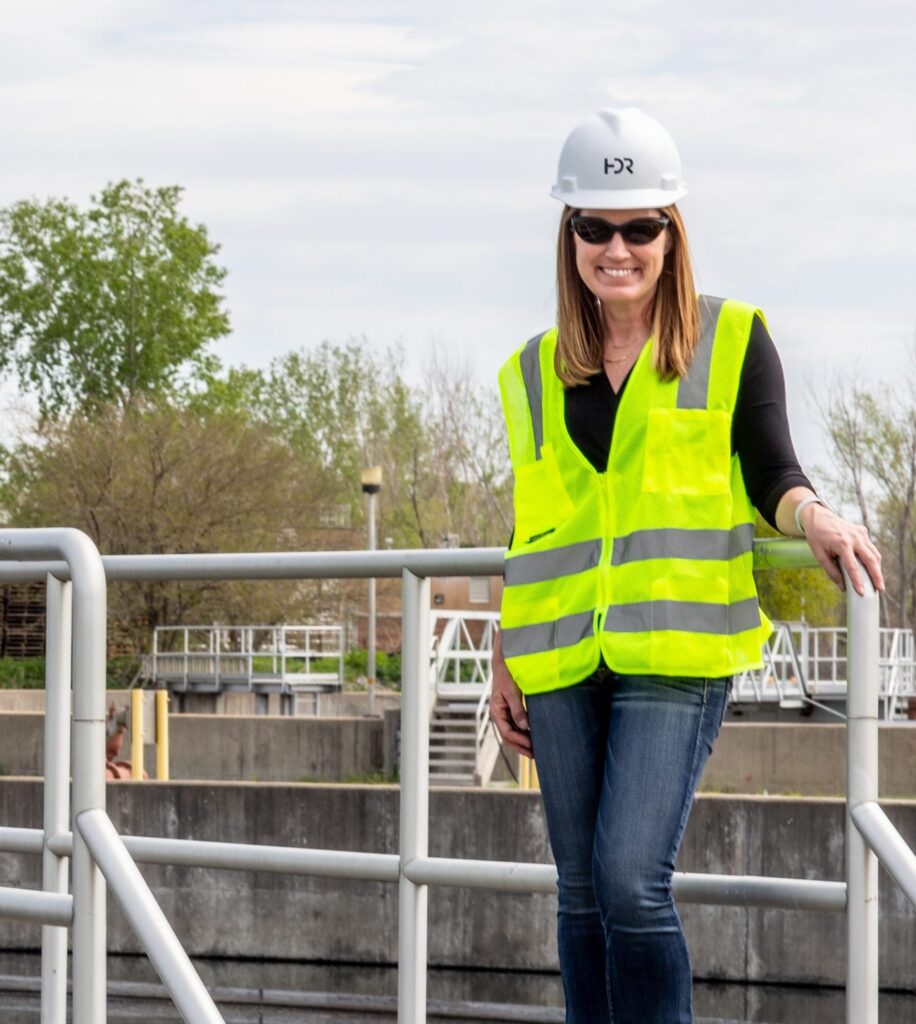
Some projects she’s particularly excited about, like Omaha’s RiverFront revitalization, are additional examples.
“It’s a project about bringing people together, allowing people to see what can happen with a community if you have a central focus point,” Ann said.
This is a message she brings when she speaks to the next generation of engineers, as well. She reminds them that the engineering community they build in Nebraska is one they’ll carry with them for the rest of their lives.
“I tell students when I’m talking to them, you look left and you look right,” Ann said “These people are going to be either your coworkers, your colleagues, your competitors, or your clients. In a state like Nebraska, you run into people you went to school with all over the place. It’s really friends for life.”