
Nebraska Women in STEM talked to wildlife biologist Elsa Forsberg about her passion for protecting endangered species and what a career in wildlife biology really looks like.
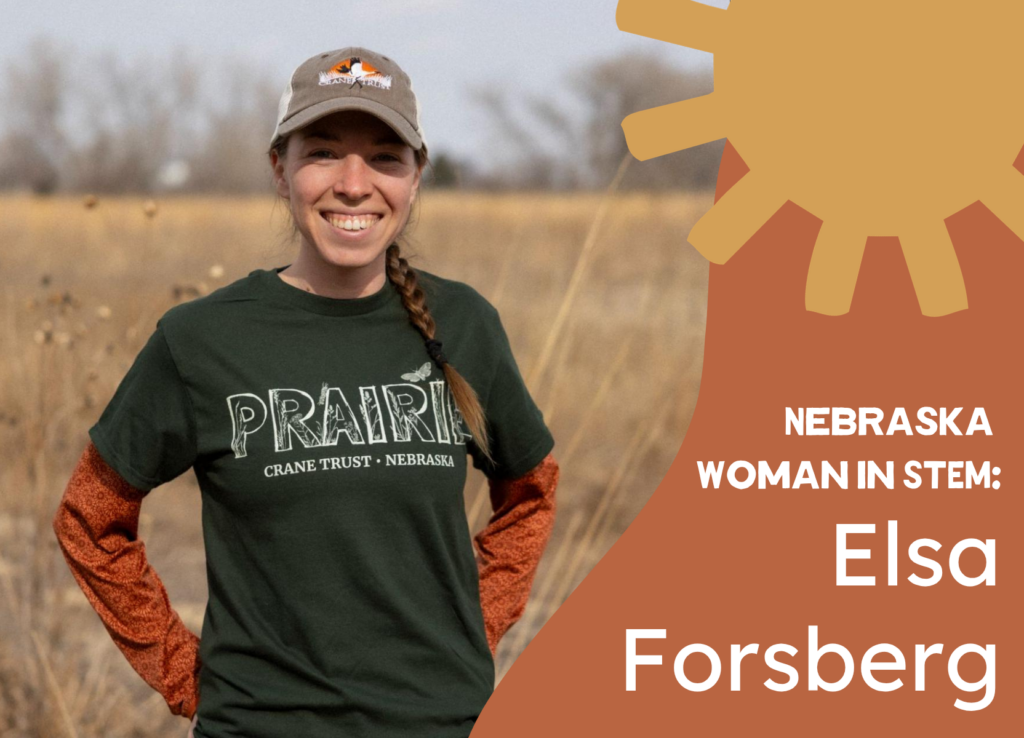
Elsa Forsberg lies covered in grass in a wet meadow in the middle of March, waiting. She holds her breath as five, then ten, then hundreds of four-foot-tall gray birds land in the water just feet from her hiding place. As they start to forage in the murky water, she freezes as one bird begins to flap its wings and jump: a tell-tale sign that a crane has stepped in a meticulously placed snare line.
Capturing this crane is part of a project to better understand Sandhill crane movements in the Central Platte River Valley and protect the species. Elsa and a team of two other biologists collect data, place a GPS tracker on the crane, and let it go.
Elsa is a wildlife biologist with the Crane Trust, a nonprofit conservation group located along the Platte River in central Nebraska. Her day-to-day duties include conducting wildlife surveys (from frogs to rodents to birds), analyzing data, and helping to document and protect the Platte River ecosystem. Her passion is to protect threatened and endangered species.
“I wanted to do something with my career that would be my way to make a difference in the world, and there’s a lot of ways you can do that, but I got really literal about it, I guess!” Elsa said.
Elsa credits her early interest in endangered species to the Lincoln Public Schools curriculum, which introduced elementary school students to the Salt Creek tiger beetle, a rare, critically endangered beetle that only lives in the saline wetlands outside of Lincoln.
“I think that was my first knowledge of that sort of thing, and it sparked my interest,” Elsa said.
She sought out opportunities to see wildlife and, starting at a young age, eagerly visited the sandhill cranes on their biannual migration through Nebraska, which is one of the biggest congregations of cranes in the world. While the sandhill cranes are not listed as endangered, whooping cranes, which migrate alongside the sandhill cranes, are.
Passionate about wildlife, Elsa found that connecting with biologists was a great way to dive into the field.
“I asked the person who I knew worked on piping plovers at the state if I could shadow her for a day. That helped me get a concept of what her job looked like, and she was thoughtful enough to introduce me to a bunch of different people,” Elsa said.
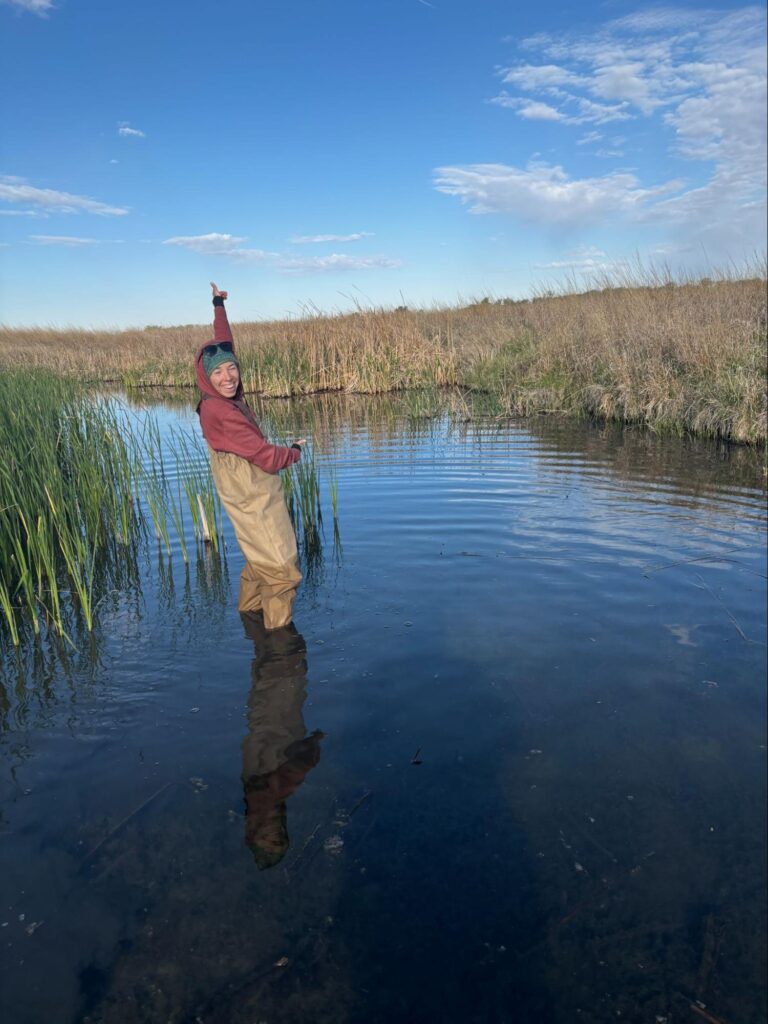
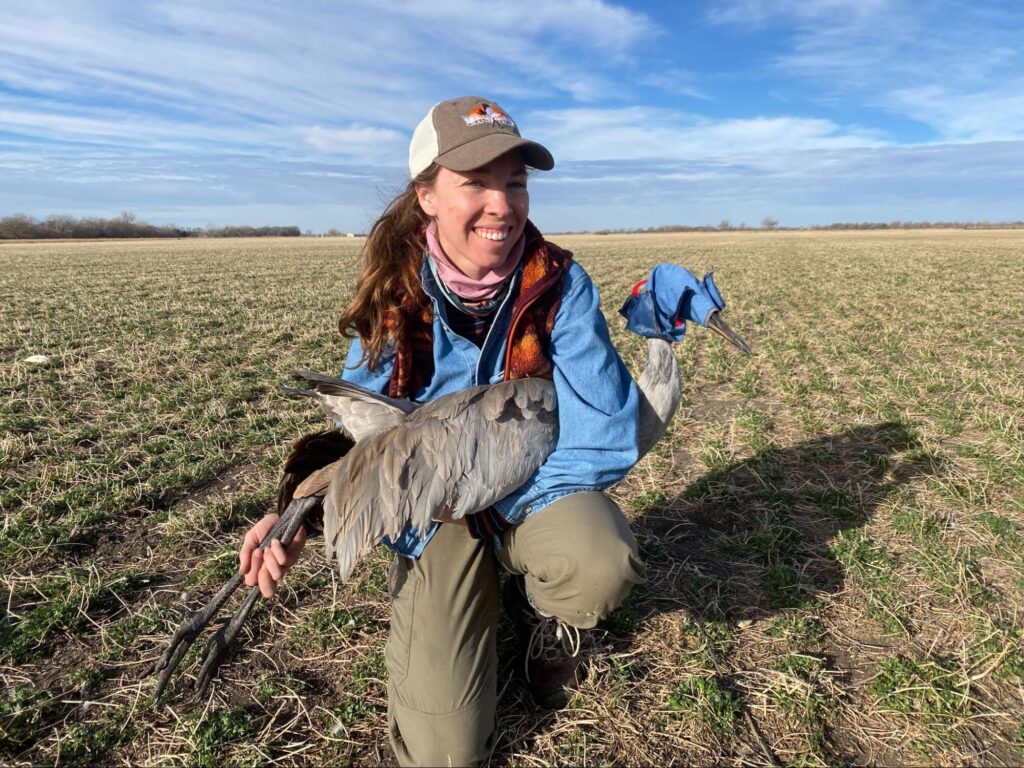
Elsa said that being a biologist can take many forms, from field data collection to policy to outreach. Before her current position, she did an environmental education internship, worked as a research technician, and collected water samples from lakes in one of her favorite ecosystems, the Nebraska Sandhills.
“Working with wildlife has a lot of different career paths,” Elsa said. “I know a lot of different people with the title biologist whose day to day looks very different. For someone who knows they want to do something with wildlife, the key is to explore what that can look like.”
While the passion for protecting endangered species and the ability to work outside are both big draws to being a wildlife biologist, Elsa said it’s the people that make the job even more fulfilling.
“I might be the bird girl, but that’s the bug guy, and that’s the plant guy, and we can all see different things at the same time [when working together],” Forsberg said. “There’s a lot of good people in conservation. Everyone’s here because they care a lot.”